
When Fantasy Refuses to Look Away
Writing harm as consequence, not spectacle
This passage works because it refuses spectacle at the moment where spectacle would be easiest. The violence is acknowledged, but the prose does not dwell on it or convert it into sensation. Instead, the narrative displaces attention onto consequence: separation from the body, corruption of life force, and the irreversible damage that spreads outward into family, lineage, and the divine order itself. The horror is not what happens, but what cannot be repaired afterward.
It also resists the usual fantasy economy of trauma. No character is strengthened, enlightened, or redeemed by what occurs. There is no revenge, no rescue, no narrative reward. Shame, grief, and failure are allowed to remain unresolved, and even the gods arrive too late. By letting myth absorb the damage rather than explain it away, the passage treats harm as something that weakens the world, not something that exists to move the story forward.
What if the afterlife doesn’t explain itself — and doesn’t need to?
The fear does not unfold. It is delivered.
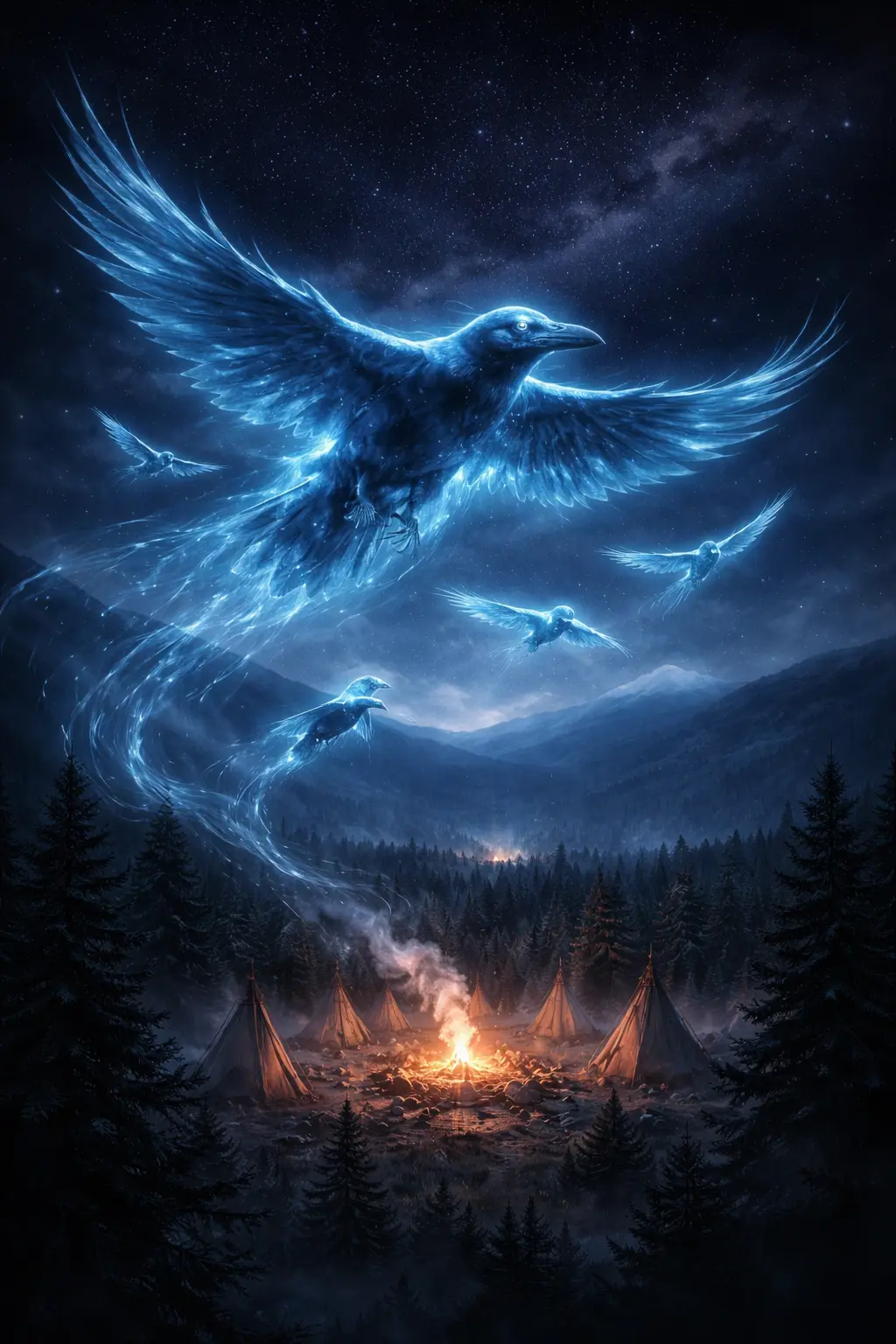
Where the World Breaks Quietly
Young, with his left leg and arm debilitated, Kauputo was known as a gentle, kind soul. Favoured by the TaReNee tribe, he was spoken of as having the makings of a shaman, and Waajinka had trusted him as a friend. An honorary member of the Crow’s family, he lived among them. Waajinka often helped him with meals and small tasks.
That night, she helped him eat and prepared him for sleep.
Waajinka focused on the familiar weight of the bowl in her hands, the heat of the fire on her face, and the sound of Kauputo’s uneven breathing — the small, ordinary things of the night. As she arranged Kauputo’s disabled leg for sleep, something struck her head. She was stunned — falling, bleeding.
Before her body hit the ground, she was already flying through the astral winds — a place with no ground, no up or down. The world there was dull and colourless, except for life force.
She watched her own body crumple, blood pouring from her head, her life force spilling with it.
From the astral, Waajinka saw black life force forcing itself into her, overwhelming the remnants of her blue TaReNee life force. Her body began to stone; her spirit remained in flight. It became a race — between the Darkskin capturing her soul, or her spirit remaining astral while her body stoned and died.
Waajinka was underaged, and her body stoned quickly.
The stoning spread to Kauputo as well. His movements slowed, then stopped. His body turned to stone and crumbled. The Darkskin collapsed inward, trapped in stone. The danger to her soul was over, as was her life.
Waajinka felt sorrow for her mother, her sisters, and her grandmother. What a disappointment she must be — failing to notice, undoing her grandmother’s work. Ashamed, she flew from the dwelling and up into the night. Her sisters and her mother flew with her. She had let them down.
The Crow Goddess came to guide Waajinka to the place of decision, where a white tunnel would open and her ancestors would welcome her. She flew not ahead, but beside her. When they reached the edge of the world’s life force, living astral flyers could not continue. They fell away, gliding in the airless dark, and waved her goodbye.
Waajinka felt herself thinning, losing substance. The Crow Goddess gathered her beneath her wings and flew beyond their planet’s blue life force, to a floating island beneath a burning blue sky and endless darkness below. On the island, they became whole, still waiting for her body’s final heartbeat.
In the village, Waajinka’s stoning heart beat a final time.
If this moment stayed with you, the story continues.
Golden Eyed Wolf is the beginning of the Mortal Immortals series.
Read Book One on Amazon